To become a music promoter in 2026, start by booking 1-2 small shows yourself (50-200 capacity rooms), build relationships with local venues and artists, learn the math of ticket pricing minus venue cost minus marketing, and scale up event by event. You don't need a degree. You don't need a license in most US states. You do need cash for venue deposits, ad spend, and the brutal lesson that 30% of your shows will lose money. The pay range is wide: $25k-$300k+ depending on city, scale, and connections.
Below is the unfiltered path.
What a Music Promoter Actually Does
A music promoter is the person who puts on the show. They:
- Book the artist (negotiate the fee, sign the contract)
- Book the venue (negotiate rental, share door, etc.)
- Handle marketing (ads, posters, social, press)
- Manage night-of logistics (door, sound check, hospitality, payouts)
- Carry the financial risk (you eat the loss if tickets don't sell)
That last one is the part nobody mentions in the YouTube "become a music promoter" videos. Promoters lose money on some shows. The good ones build a portfolio so the winners cover the losers.
How to Be a Promoter for Music (The First Show)
Start small. 50-200 capacity. Here's the workflow:
Step 1: Pick an artist. Local rising act with 2k-10k social followers. Big enough to draw, small enough to negotiate with.
Step 2: Pick a venue. Bars and small clubs work. Many will rent for $500-$1,500 or do a 70/30 door deal. Some will let you do it for free if their bar makes drinks.
Step 3: Build the math.
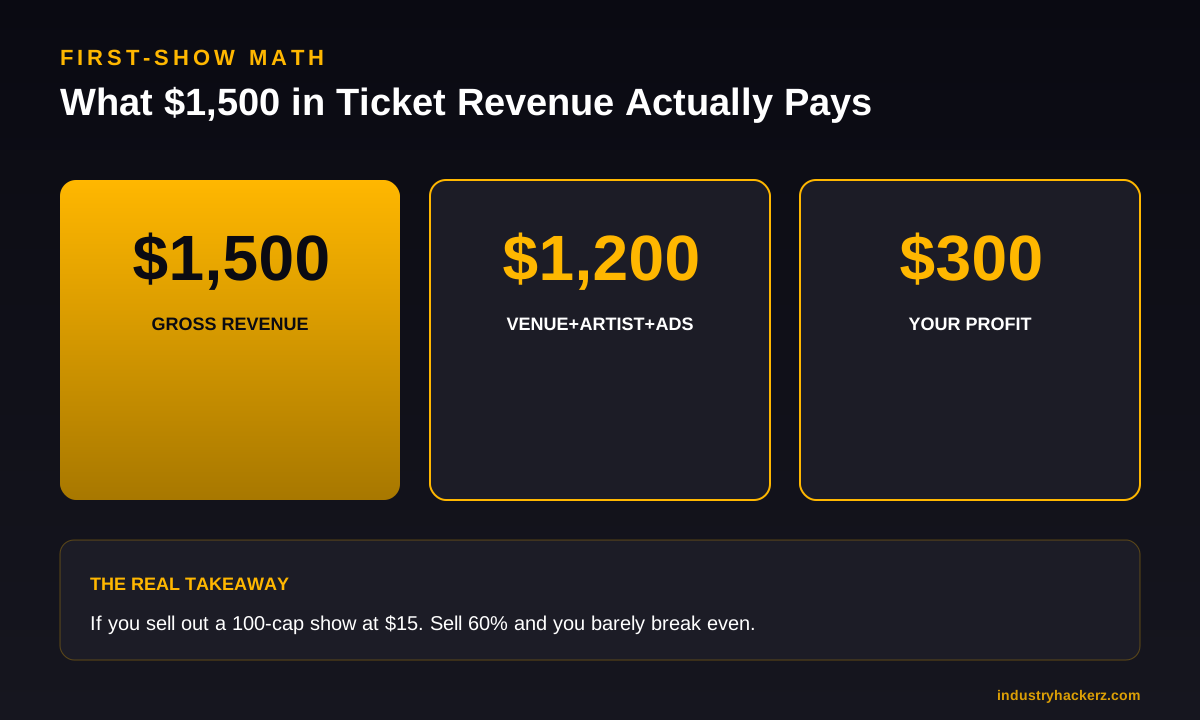
- Cap: 100 people
- Ticket: $15
- Best case revenue: $1,500
- Venue: $500 fixed (or 30% of door)
- Artist fee: $400
- Marketing: $200
- Sound/lighting/extras: $100
- Net at full capacity: ~$300
That $300 is what you take home if you sell out. You sell 60% capacity, you barely break even. You sell 40%, you eat a $200-$400 loss.
Step 4: Sign contracts. Even on $400 artist deals, get it in writing. Use a basic performer contract template (Google "performer agreement template music"). Specify the fee, set times, soundcheck times, hospitality requirements.
Step 5: Run the ads. Use Meta and TikTok ads. Budget 10-15% of expected ticket revenue. For a $1,500 cap, that's $150-$225 in ad spend.
Step 6: Show night. Be there 4 hours early. Have cash for the artist payout. Have an extra $50 for emergencies.
Step 7: After the show. Pay everyone within 48 hours. Send thank-yous to the venue and artist. Both will book with you again if you treat them right.
How to Become a Music Promoter With No Money
You can start with under $500 if you're scrappy.
The cheap path:
- Partner with an existing bar. They cover the venue cost. You bring the artist and the crowd. Door split 70/30 in your favor.
- Pay the artist out of ticket sales only. Negotiate a "vs. door" deal. Artist gets either a flat minimum (low) or a percentage of door (capped). Standard for new venues.
- Free marketing. Run your own TikTok and Reels for the event. Skip paid ads. Use the artist's existing audience.
- Use a free ticketing platform like Eventbrite Free tier or DICE for ticket sales. You pay only the per-ticket fee.
- Bring your own gear if the venue doesn't have a PA. A used Bose S1 Pro or similar runs $400-$600 used and pays for itself in 2 shows.
This setup means your only real cash exposure is artist deposits and a small marketing budget. Workable.
How to Become a Music Promoter for Festivals
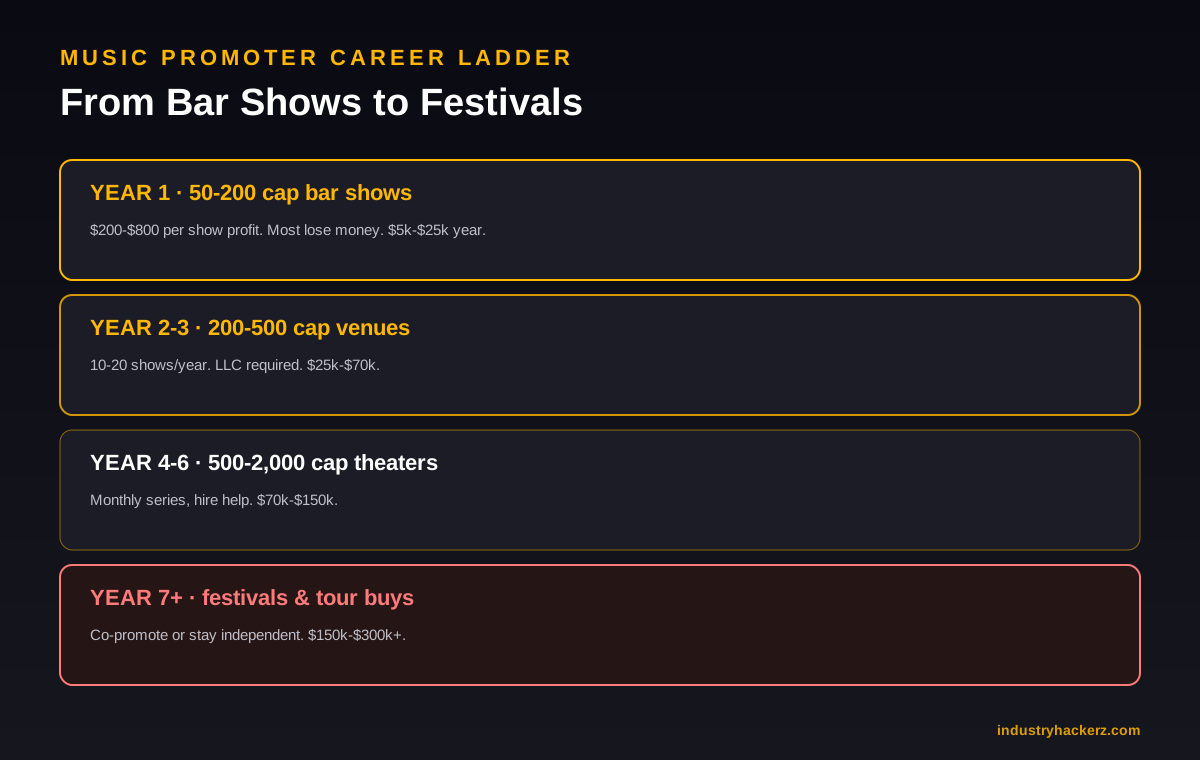
Festival promotion is a different sport. You don't start there. Most festival promoters spent 5-10 years doing club shows first.
The path to festival promotion:
- Year 1-3: Do club and theater shows. Build reputation.
- Year 4-5: Start a recurring monthly series at a 500-1,500 cap venue.
- Year 5-7: Co-promote a one-day or two-day festival as a junior partner with an established company.
- Year 7+: Launch your own festival, usually starting at 2,000-5,000 attendance.
Festivals typically need $250k-$2M in capital just to start. Most festival promoters use a combination of investor money, ticket pre-sales, and lines of credit. Some never recover from a single bad year.
If you're asking "how to become a promoter for music festivals" expecting to start there, slow down. The bar shows are the apprenticeship.
What Companies Do the Promotion for Music Festivals?
The big names: Live Nation, AEG Presents, Goldenvoice (Coachella's parent, owned by AEG), Insomniac (EDC, owned by Live Nation), Bonnaroo (owned by Live Nation), C3 Presents (Lollapalooza, owned by Live Nation), Superfly (Outside Lands, partially Live Nation).
Live Nation alone produces or promotes about 50% of major US concerts. AEG is the other major player. After that, regional independents and a few large genre-specific companies (like Insomniac for EDM, Goldenvoice for indie/alt) dominate.
If you want to work in festival promotion, working for one of these is a faster path than starting your own. Live Nation hires hundreds of regional roles a year.
How Much Do Music Promoters Make in One Month?
Wildly variable. Range:
- Brand new local promoter: $0-$2,000 per month. Often negative in early months.
- Mid-tier independent (5+ years): $5,000-$12,000 per month.
- Established regional company: $10,000-$30,000+ per month.
- Festival principal: $50,000+ per month during festival prep season, less in off-season.
The variance comes from: city size, genre, whether you have a recurring series, and whether you have an LLC structure that lets you absorb losses.
A promoter who runs 2 shows a month and clears $400 on each is making $9,600 a year, not a living. To make this a real income, you need either 1-2 big shows per month or 4-6 smaller ones.
Should I Put "Music Promoter" for Passport Application?
Yes if it's your primary profession and you can document it (LLC, tax filings, contracts). For occasional side promoting, list your main job instead. Customs and embassies sometimes question "promoter" as a category because it's been used as cover for less savory work historically.
Be ready to show: business registration, recent event flyers with your company name, and a recent contract or invoice.
How Much Do Promoters Make in One Month for a Music Project?
If you're promoting one specific artist (not running your own events), the typical deal:
- Flat retainer: $500-$3,000/month per artist
- Commission on tour bookings: 10-20% of gross gig revenue
- Hybrid: Lower retainer plus commission
A solo promoter working with 3-5 artists at $1,500/month retainer is making $4,500-$7,500/month with commission upside. Most independent promoters work this hybrid model rather than running their own shows from scratch.
How to Start a Promotion Company for Music
Legal structure first:
- Form an LLC in your state. Costs $50-$500 depending on state. ($800 in California with the annual franchise tax.)
- Get an EIN from IRS.gov (free, 10 minutes).
- Open a business bank account with the LLC.
- Get liability insurance. Promoter's liability insurance runs $400-$1,200/year for small-scale work.
- Register a DBA if your trading name differs from the LLC.
Skip incorporating in Delaware unless your lawyer specifically recommends it. For most local promoters, your home state LLC is fine.
Costs to legitimately set up: $500-$1,500. Time: 1-2 weeks.
What I'd Skip
Picking sides:
- "Music promoter certification" courses online. No license is required in most US states. Save the money.
- Getting an MBA before starting. Useless. Run your first show instead.
- Trying to book national artists in year 1. They have agents who won't return your call. Start local.
- Signing exclusive deals with artists when you have no track record. They'll resent it.
- Overspending on flyers and posters in 2026. Paper flyers don't move the needle. Digital ads do.
How to be a promoter for music?
Book a small local show (50-200 cap), negotiate venue and artist deals, run targeted ads, manage night-of logistics, and pay everyone within 48 hours. Start with one show. Scale slowly.
How to become a promoter for music?
Same as above, plus form an LLC, open a business bank account, get liability insurance, and build a recurring series after 2-3 successful one-off shows.
How to be a promoter for music festivals?
Festival promotion typically requires 5-10 years of club and theater experience first. The path: club shows → recurring series → mid-size theater → co-promote festival → launch your own.
How to become a promoter for music festivals?
Apprentice with an existing festival company (Live Nation, AEG, Insomniac all hire). Work in their operations or marketing for 2-3 years. Then launch independent or co-promote with them.
Should I put music promoter for passport application?
Yes if it's your primary verifiable profession with LLC and tax filings. For occasional side work, list your main job. Customs sometimes questions vague titles.
How much do promoters make in one month for music?
$0-$2,000 brand new. $5,000-$12,000 mid-tier. $10,000-$30,000+ established. $50,000+ during festival prep season for festival principals.
How to start a promotion company for music?
Form an LLC ($50-$500), get EIN (free), open business bank account, get liability insurance ($400-$1,200/year), register DBA if needed. Total setup: $500-$1,500.
What companies do the promotion for music festivals?
Live Nation, AEG Presents, Goldenvoice, Insomniac, C3 Presents, Superfly, Bonnaroo (Live Nation), and a long tail of regional independents.
Do you need to hire people for music promotion?
Not in year 1. Most solo promoters work alone or with one partner. By year 3, hiring a part-time marketing person and a night-of show runner becomes worthwhile.
Can you make a living as a music promoter?
Yes, but the income is volatile. Most new promoters quit in year 1 because the early shows lose money. The 30% who stay typically reach $50,000+ by year 3-4. If your promotion company runs on WordPress, the WordPress AEO Tool at aeogodmode.io makes your event pages and promoter profile cite-worthy in ChatGPT and Google AI Overviews when people search for shows in your city. For drafting outreach bios, finding clean event names, and writing event captions that convert, our free TikTok bio generator and caption generator work just as well for event marketing.