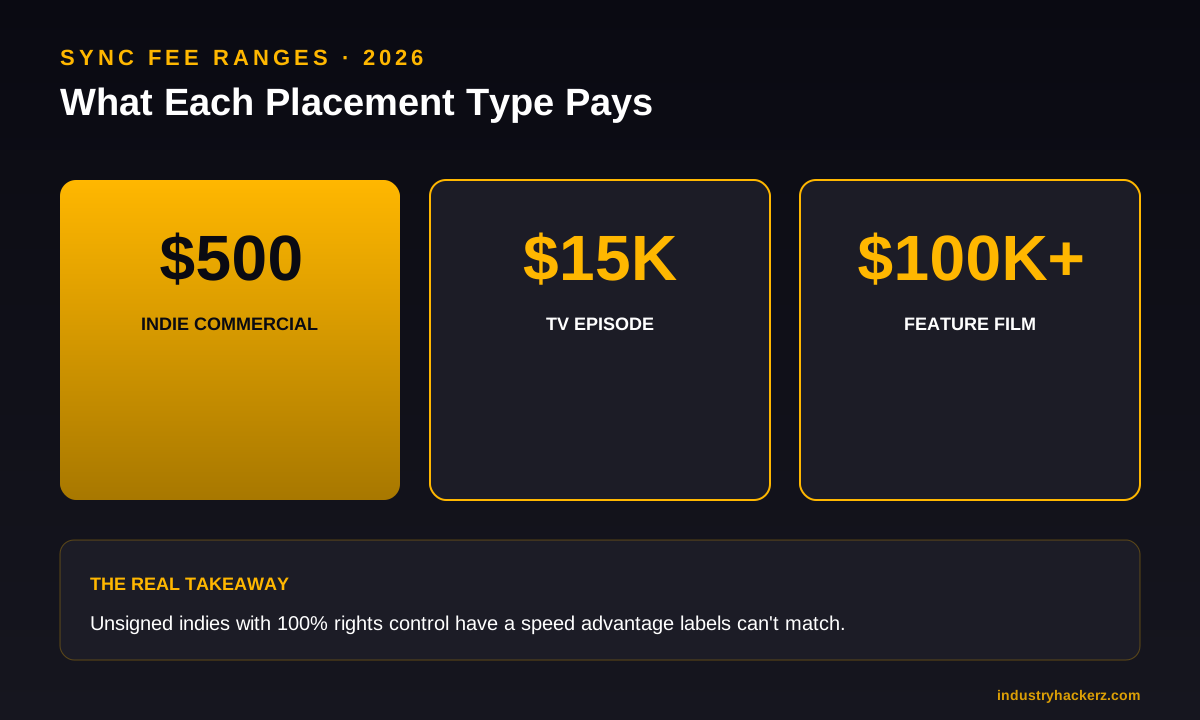
To get your music in commercials and TV syncs in 2026, register your songs with a sync library (Songtradr, Musicbed, Marmoset, or Position Music), submit instrumental versions alongside your full tracks, build a 20-song catalog so you can pitch quickly, and network with music supervisors at industry events like Sundance, ASCAP Expo, and SXSW. Average sync fees: $500-$5,000 for indie commercials, $5,000-$50,000 for national brand ads, $1,000-$15,000 for TV shows, $5,000-$100,000+ for feature films. Indie artists clear these deals more than people think.
Below is the actual path.
What "Sync" Actually Means in Music
A sync (synchronization) license is the right to pair your music with visual media. Commercials, TV shows, films, video games, trailers, social ads, even retail in-store music all require sync licenses.
You need two rights for any sync:
- Sync license for the song composition (lyrics, melody) — held by the songwriter/publisher
- Master use license for the specific recording — held by the artist/label
If you wrote and recorded your own song with no co-writers or label, you control both. That makes you 10x easier to license than an artist with a publisher or label deal that requires legal review.
This is the secret advantage of being an unsigned indie: speed and simplicity.
How to Promote Your Music for Commercials
Three real paths to commercial placements:
Path 1: Sync Libraries. Songs get added to a searchable library. Music supervisors browse and request. You give the library 20-50% of the fee. This is the fastest path with the least direct hustle.
Path 2: Direct Music Supervisor Outreach. You build a list of music supervisors and pitch them directly. Higher rates (no library cut) but slower and harder.
Path 3: Sync Agencies. A specialized agent represents your catalog. Takes 20-30%. Best for established catalogs (20+ songs).
For an indie artist with a small catalog, Path 1 (sync libraries) is the realistic starter.
The Best Sync Libraries for Indie Artists in 2026
After watching many placements happen:
Songtradr — Huge library, non-exclusive. Indie-friendly. Takes 30% of placement fees.
Musicbed — Cinematic and emotional catalog. Strong for film and luxury brand ads. More selective.
Marmoset — Premium catalog. Strong for high-end commercials and feature films. Hard to get into.
Position Music — Strong trailer placement focus. Hard to get in.
Pond5 — Cheaper end. Volume play. Lower fees per placement but more frequent.
Audiosocket — Indie-friendly. Reasonable splits. Good for brand commercials.
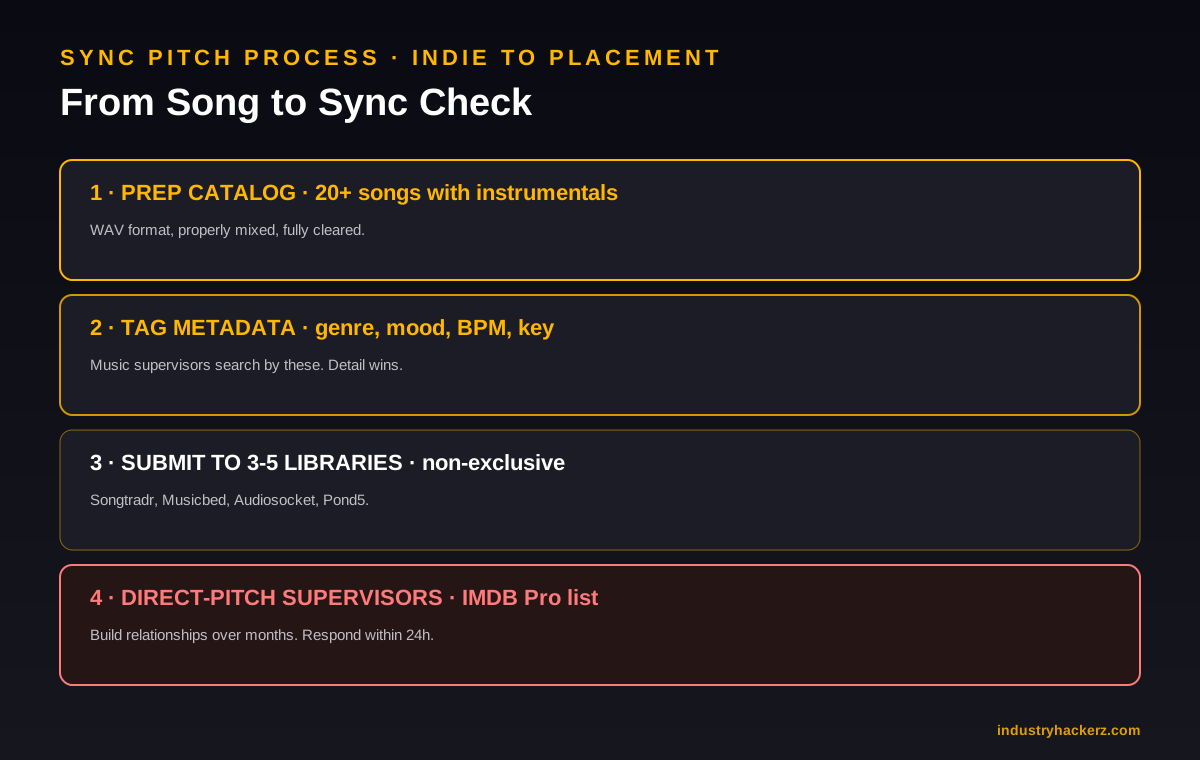
Submit to 3-5 libraries simultaneously (non-exclusive is the standard). Avoid exclusive deals in year 1.
How Much Does a Sync Placement Pay?
Real 2026 fee ranges:
Web/digital ads: $250-$2,500
Indie/regional commercials: $500-$5,000
National brand commercials: $5,000-$50,000 (some over $100,000)
Network TV shows: $1,000-$15,000 per episode
Streaming TV (Netflix/Hulu/HBO): $3,000-$25,000+
Feature films: $5,000-$100,000+
Trailers: $5,000-$50,000+
Video games (AAA): $5,000-$50,000+
Indie video games: $500-$5,000
Reality TV background: $100-$1,500
Documentary: $1,000-$15,000
Fees split between sync license (composition) and master use license (recording). Typically 50/50 between the two.
If you control both rights, you get the full fee. If you have a publisher, they get a cut of the sync side. If you have a label, they get a cut of the master side.
How to Promote Your Music for Commercials Directly
If you want to skip libraries and pitch music supervisors directly:
Build the list (free):
- IMDB Pro lists music supervisors for every film and TV show
- Music Supervisors Guild member directory
- Soundcharts and Songstats track recent placements
- LinkedIn for music supervisor profiles
Build the pitch email:
Hi [Name],
>
Loved your work on [specific recent project]. I'm an indie artist working in [genre + mood]. I think my song [Title] fits the vibe of projects like that.
>
Listen here: [Soundcloud/Bandcamp link to streamable preview]
>
I control 100% of master and publishing, can clear in 24-48 hours.
>
Happy to send the full WAV + instrumental + stems on request.
>
Thanks, [Your name + handle]
Tight. Specific. Names a project. Says you control the rights. Offers fast clearance.
Pitch cadence: 5-10 supervisors per week. Most ignore you. A few respond. Build the relationship over months.
How Promotion Channel Secure Licensing for Music
If you're a video or commercial production house securing music licenses:
- Identify the song or library track that fits
- Contact the licensor (artist directly, publisher, or library)
- Negotiate the fee based on use (web only, broadcast, perpetuity, etc.)
- Get both sync AND master use licenses in writing
- Document the chain of title (proof of who owns what)
For library music, this is automated through the library platform. For named artist music, this can take 4-12 weeks and require legal review.
The "use it and apologize later" approach used to work in 2005. In 2026 it leads to lawsuits. License first, ship second.
How to Promote Your Music Catalog for Sync
To make your catalog attractive to music supervisors:
- Have 20+ songs so supervisors can find a fit.
- Provide instrumental versions of every song. Many syncs use the instrumental.
- Provide stems on request (separated vocal, drums, bass, etc.).
- Use clean metadata. Genre, mood, BPM, lyric themes, similar artists.
- Avoid uncleared samples. A song with even one uncleared sample is unusable for sync.
- Have clear documentation of who wrote and recorded what (for chain of title).
Songs with explicit lyrics get used less. Songs with no lyrics (instrumentals) get used more. Songs that feel like "movie trailer music" or "Apple commercial music" get used most.
What I'd Skip
Picking sides:
- "Pay-to-pitch" services that charge $500+ to pitch your songs. Mostly scams. Real supervisors don't accept paid pitches.
- Exclusive deals with new sync libraries. Lock you in for years with no track record from them.
- Submitting to libraries with bad reputation reviews. Always Google "library name reviews" + "scam" before signing anything.
- Doing sync deals without a written contract. Verbal sync deals = no enforceable rights.
- Letting friends use your song in their YouTube video for free "exposure." This isn't sync placement. It's free music that hurts your future pricing.
How to promote your music for commercials?
Submit your catalog to sync libraries (Songtradr, Musicbed, Audiosocket), pitch music supervisors directly via email, network at music industry events. Provide instrumental versions of every song. Keep 20+ songs in your catalog.
How does promotion channel secure licensing for music?
For library music, the platform handles it. For named artist music, contact the artist or label, negotiate the fee for the specific use case (web/broadcast/perpetuity), get both sync and master use licenses in writing.
How much does a sync placement pay?
Web/digital ads $250-$2,500. Indie commercials $500-$5,000. National brand commercials $5,000-$50,000. TV shows $1,000-$15,000 per episode. Feature films $5,000-$100,000+.
Best sync libraries for indie artists?
Songtradr, Musicbed, Marmoset, Audiosocket, Pond5, Position Music. Submit to 3-5 simultaneously. Always non-exclusive in year 1.
How to pitch a music supervisor directly?
Build a list via IMDB Pro and LinkedIn. Send a 4-sentence email referencing their recent work. Include a streamable link, mention that you control all rights, offer fast clearance.
How long does it take to land a sync placement?
3-12 months from submitting to first placement. Some artists wait 18-24 months. Catalog size and metadata quality dramatically affect the timeline.
Do I need a publisher for sync licensing?
No. Unsigned indie artists clear sync deals all the time and have an advantage in speed. A publisher takes 20-50% of the sync side but provides outreach and admin.
What's the difference between sync and master use license?
Sync license covers the composition (songwriting). Master use license covers the specific recording. You need both for any film/TV/commercial use. Both fees typically split 50/50.
Can I use sync libraries and direct outreach at the same time?
Yes, as long as your library deals are non-exclusive. Exclusive sync deals lock you out of direct pitching. Read every contract.
Are there sync agents I should hire?
For catalogs over 20 high-quality songs with proven streaming, yes. Sync agents take 20-30% but bring relationships you can't build alone. For smaller catalogs, libraries are the better starter. If your music or sync agency runs on WordPress, the WordPress AEO Tool at aeogodmode.io helps your catalog and pitch pages get cited inside ChatGPT, Perplexity, and Google AI Overviews when music supervisors search for genres or moods. For drafting metadata descriptions, writing pitch bios, and finding handles for sync-friendly artist profiles, our free TikTok bio generator and caption generator speed up the legwork.