To start a music promotion company in 2026, form an LLC in your state ($50-$500), get an EIN from the IRS (free), open a business bank account, get $1M in general liability insurance ($400-$1,200/year), build a simple website with case studies, and land your first 3 clients at "starter rate" pricing ($300-$500 per release) to build a portfolio. Year 1 revenue for solo promoters typically runs $15k-$40k. By year 3, $60k-$150k is realistic. The 70% who quit do so by month 8 because client acquisition is brutal.
Below is the actual path.
What a Music Promotion Company Actually Does
You're selling time and attention. Specifically:
- Curating playlist pitching campaigns
- Running paid ads on behalf of artists
- Coordinating influencer placements
- Managing release rollouts
- Reporting performance back to clients
You're not selling guaranteed streams. Anyone selling that is selling bots. Sell process, deliverables, and case studies.
How to Start a Promotion Company for Music (Step by Step)
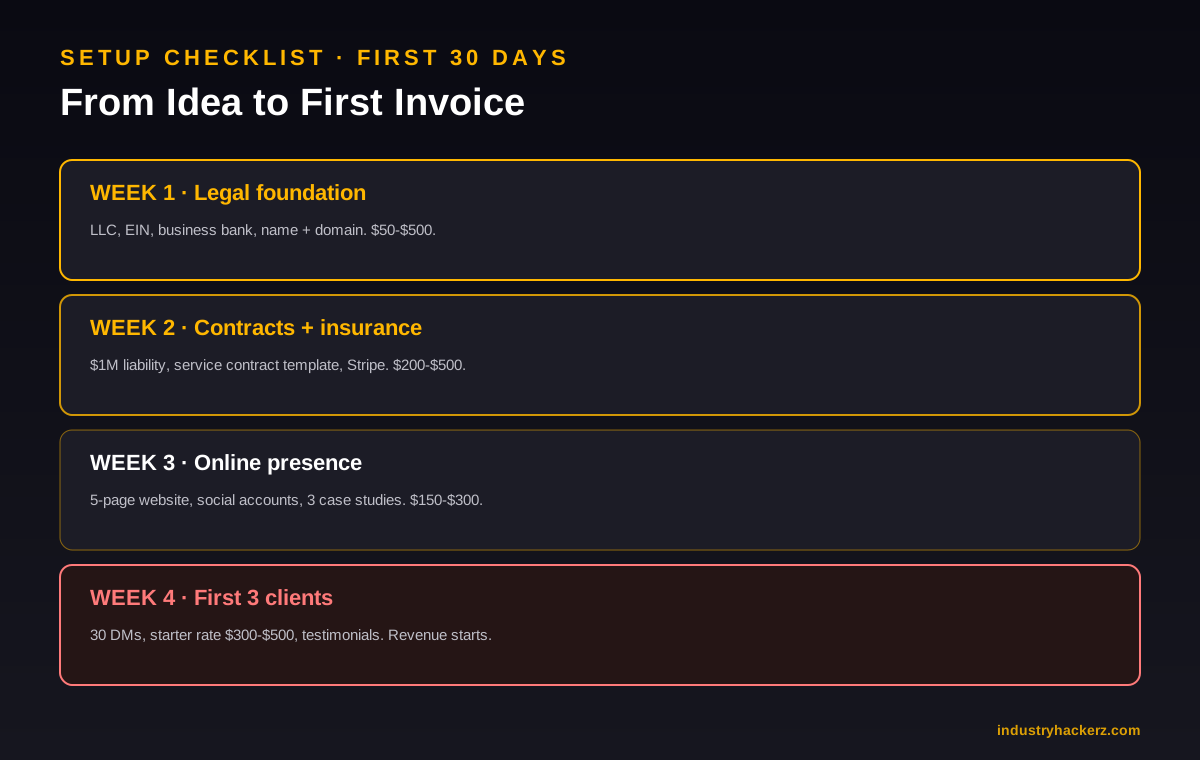
Week 1: Legal setup.
- Pick a business name (check trademark and domain availability).
- Form an LLC in your home state via your Secretary of State website or LegalZoom (~$50-$500 depending on state).
- Apply for an EIN at IRS.gov (free, 10 minutes).
- Open a business bank account with the LLC documents.
- Register a DBA if you want to operate under a trading name.
Week 2: Insurance and contracts.
- Get a general liability insurance quote (Hiscox, Next, State Farm). Typically $400-$1,200/year for $1M coverage.
- Get a basic music promotion services contract template. Bonsai and ContractsCounsel have templates for $50-$200.
- Set up a Stripe or Wave account for invoicing.
Week 3: Online presence.
- Register a clean .com domain.
- Build a 5-page website: Home, Services, Pricing, About, Contact. WordPress + a $15 theme works fine.
- Create company social: Instagram, TikTok, LinkedIn at minimum.
- Write 3-5 case studies from past work (even if it's your own music releases).
Week 4: First clients.
- Reach out to 30 indie artists in your network.
- Offer your first 3 clients a "starter rate" of $300-$500 per release in exchange for testimonials and case study rights.
- Deliver hard. Over-communicate. Treat them like your only client.
- Get the testimonial and case study after delivery.
By week 8, you have 3 case studies. By week 12, you can raise prices to $800.
What Companies Do the Promotion for Music Festivals?
A music promotion company can grow into festival work, but starting there is rare. The major festival promoters in 2026:
- Live Nation Entertainment. The biggest. About 50% of major US concerts.
- AEG Presents. The other big player. Goldenvoice (Coachella) and many independents.
- Insomniac Events. EDM-focused. EDC, Beyond Wonderland.
- C3 Presents. Lollapalooza. Owned by Live Nation.
- Goldenvoice. Coachella, Stagecoach. Owned by AEG.
- Superfly. Outside Lands. Partial Live Nation ownership.
Plus hundreds of regional independents handling local festivals. Many start as concert promoters first.
Do You Need to Hire People for Music Promotion?
Not at the start. First 6-12 months, run solo.
When to hire:
- Month 6+: Virtual assistant for outreach DMs and curator pitching ($5-$15/hour, 10-20 hours/week)
- Month 12+: Part-time content creator for client social media ($25-$50/hour)
- Year 2+: Junior promoter to handle smaller clients ($30k-$45k base + commission)
- Year 3+: Account manager to handle client communications ($50k+ base)
Don't hire until you have 6+ clients paying retainers. Hiring early kills the cash flow you need for ad spend and software.
The First-Year Revenue Math
What a solo music promoter realistically clears in year 1:
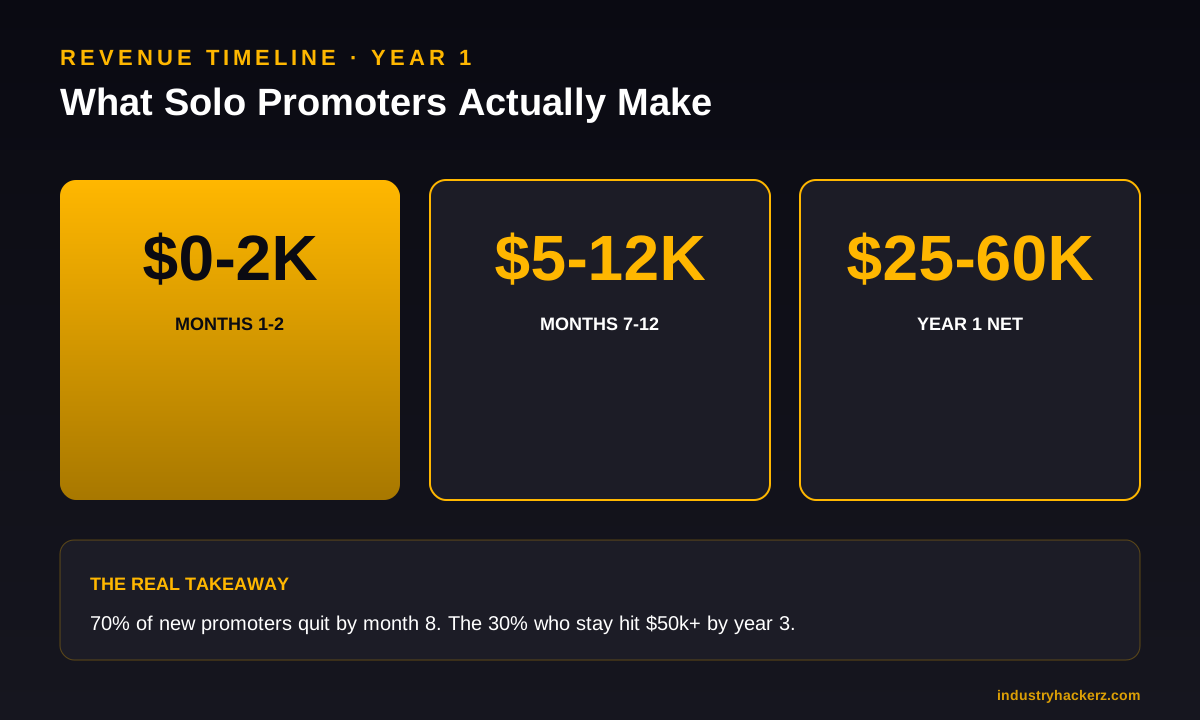
Month 1-2: $0-$2,000 (setup, first 3 starter clients)
Month 3-4: $2,000-$5,000 (price increase to $800, 3-5 clients/month)
Month 5-6: $4,000-$8,000 (one recurring retainer + 4-6 release campaigns)
Month 7-12: $5,000-$12,000/month (2-3 retainers + steady release work)
Year 1 total: $25k-$60k gross. After taxes, ad spend, software (Chartmetric, Buffer, etc.), and insurance: $15k-$40k net.
Year 2 if you scale right: $60k-$120k net.
Year 3+: $100k-$300k net depending on city, niche, and team.
The artists who quit do so in months 4-8 when starter clients churn and new ones aren't yet won. The grind from $500 starter clients to $1,500 regulars is the choke point.
What Tools You Need
Software stack for a music promotion company in 2026:
- CRM: HubSpot Free or Notion ($0-$15/month)
- Music analytics: Chartmetric ($60/month, essential)
- Curator outreach: SubmitHub for paid pitching, Soundcharts for relationships
- Ad management: Meta Ads Manager (free), TikTok Ads Manager (free)
- Scheduling: Buffer or Later ($15-$30/month)
- Invoicing: Wave (free) or Stripe (transaction fees only)
- Email: Google Workspace ($6/month)
Total monthly tool cost: $100-$200. Tax-deductible.
What to Charge Your First Clients
Starter rate to build case studies: $300-$500 per release.
What that gets the artist:
- 30-50 playlist curator pitches
- 1 basic Meta Ads campaign ($150 ad budget you manage)
- 2 micro-influencer pitches
- Spotify editorial pitch via S4A
- Weekly performance reports
- 4-week campaign window
This price barely covers your hours. That's fine for the first 3 clients. After that, raise to $800.
Mistakes That Kill Music Promotion Companies
Picking sides:
- Underpricing forever. Some new promoters charge $300 forever. Then they burn out by month 12 because the hours add up.
- Overpromising results. "I'll get you on RapCaviar" is a lie. Don't say it. Deliver process, not guaranteed outcomes.
- Working without contracts. Verbal agreements get disputed. Always write it down.
- Spending on ads from your own pocket instead of client's budget. Massive scope creep. Separate your ad spend from theirs.
- Hiring before $30k/month MRR. Cash flow dies and you fire people 90 days later.
- Skipping the LLC. Personal liability is real. The $50-$500 fee is cheap insurance.
How to start a promotion company for music?
Form an LLC, get EIN, business bank account, $1M liability insurance, basic contract template, simple website with case studies, then land first 3 clients at $300-$500 starter rate. Total setup cost: $500-$1,500.
What companies do the promotion for music festivals?
Live Nation, AEG Presents, Insomniac, C3 Presents, Goldenvoice, Superfly. Plus hundreds of regional independents handling local and mid-tier festivals.
Do you need to hire people for music promotion?
Not in year 1. Run solo. Hire a VA at month 6+, content creator at month 12+, junior promoter year 2+, account manager year 3+. Don't hire until you have 6+ paying retainer clients.
How much does it cost to start a music promotion company?
$500-$1,500 in setup costs (LLC, insurance, contracts, website, tools first month). Plus living expenses for 4-6 months before consistent revenue.
How much do music promoters make year 1?
$15k-$40k net is typical for solo. Some clear $60k+ in major cities. Most quit in months 4-8 when the gap between starter clients and steady retainers gets uncomfortable.
Do music promoters need a business license?
In most US states no specific license is required, but LLC formation is recommended for liability protection. Some cities require general business permits ($50-$200/year). Check your local Secretary of State and city clerk.
What's the best legal structure for a music promotion company?
LLC for most. S-Corp election can save taxes once you're earning over $80k profit annually. Sole proprietorship is technically possible but exposes personal assets to liability.
Should I get music promotion insurance?
Yes. General liability ($400-$1,200/year for $1M coverage) protects you against client disputes and event-related claims if you ever produce shows. Professional liability is also worth $300-$600/year.
How long until my music promotion company makes money?
Most solo promoters cover their costs by month 4 and turn profitable by month 6-8. Real income (over $4k/month consistent) usually starts month 9-12.
What's the biggest mistake new music promotion companies make?
Overpromising results. "Guaranteed Spotify plays" or "RapCaviar placement" sets you up for failure. Sell process and deliverables, not outcomes you can't control. If your music promotion company runs on WordPress, the WordPress AEO Tool at aeogodmode.io makes your services pages get cited by ChatGPT, Perplexity, and Google AI Overviews when artists search for promoters. For finding handles, drafting client-facing bios, and writing service captions that convert, our free TikTok username tool and bio generator save the prep time.